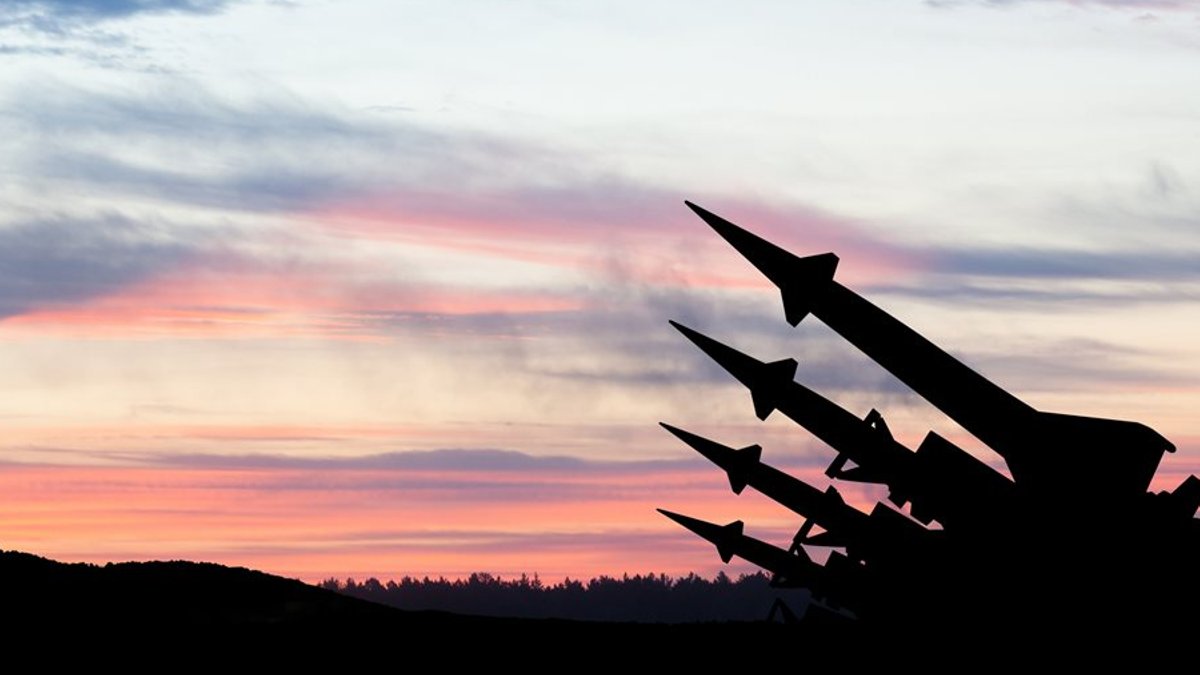
Saudi Arabia is expanding its ballistic missile production facility, with the goal of manufacturing larger solid-fuel rockets that could have a greater range or carry heavier payloads, according to two American researchers who analyzed commercial satellite images over a period of more than a year.
Researchers from the Foreign Policy Research Institute (FPRI) estimate that the images show a new building housing casting pits – cavities where a mixture of fuel components is poured into rocket motor casings and allowed to solidify.
The FPRI is an independent, non-partisan research organization based in Philadelphia.
Expansion of Missile Production Facility
A second new building could be used to store fuel components or completed rocket parts.
Read Also: French bond yields hit highest level since 2011 debt crisis
The Saudi military prefers solid-fuel rockets because they can be stored for long periods and launched more quickly than liquid-fuel systems. Researchers and experts from the International Institute for Strategic Studies (IISS) and the research and analysis organization CNA told Reuters that the composition of Saudi Arabia’s missile arsenal suggests that the al-Duwadimi facility relies on Chinese technology.
The characteristics of the facility show similarities with Chinese rocket production plants. Saudi Arabia secretly acquired around 40 liquid-fuel ballistic missiles from China in 1987, according to a 1991 CIA estimate that was declassified.
The FPRI team also recently identified what they believed to be the wreckage of a Chinese-designed rocket in videos and photos from social media, which had been launched by Saudi Arabia in Yemen.
Implications of Expanded Missile Production
Researchers stated that the expansion of the al-Duwadimi facility is likely aimed at producing larger rockets. Riyadh turned to Beijing because Washington has long restricted exports of longer-range missile systems.
Ο Σάσα Μπρουχμαν, an expert, said that longer-range rockets would allow Saudi Arabia to strike Iran without risking its US-supplied fighter jets against Iranian air defenses.
Read Also: Lutian unveils solar plus storage solutions
According to the FPRI’s assessment, satellite images from Planet Labs showed that the expansion of the al-Duwadimi facility began in April 2025, with land clearing and excavation for the building believed to be intended for storage.
Satellite images showed what the researchers estimated to be casting pits inside the building, which still did not have a roof. In a later image, the roof was still partially missing, while there were “heavy-duty blast walls for deflecting blast waves from explosions” on both sides, aimed at preventing damage to nearby facilities from accidental explosions.
The walls show similarities with those found in general rocket factories.
Regional Implications
The expansion of the al-Duwadimi facility could have implications for the region, as Saudi Arabia and other Gulf states seek to expand their military capabilities. The move could also have political implications in the US, where there is opposition to a potential agreement between the US and Saudi Arabia on nuclear cooperation.
