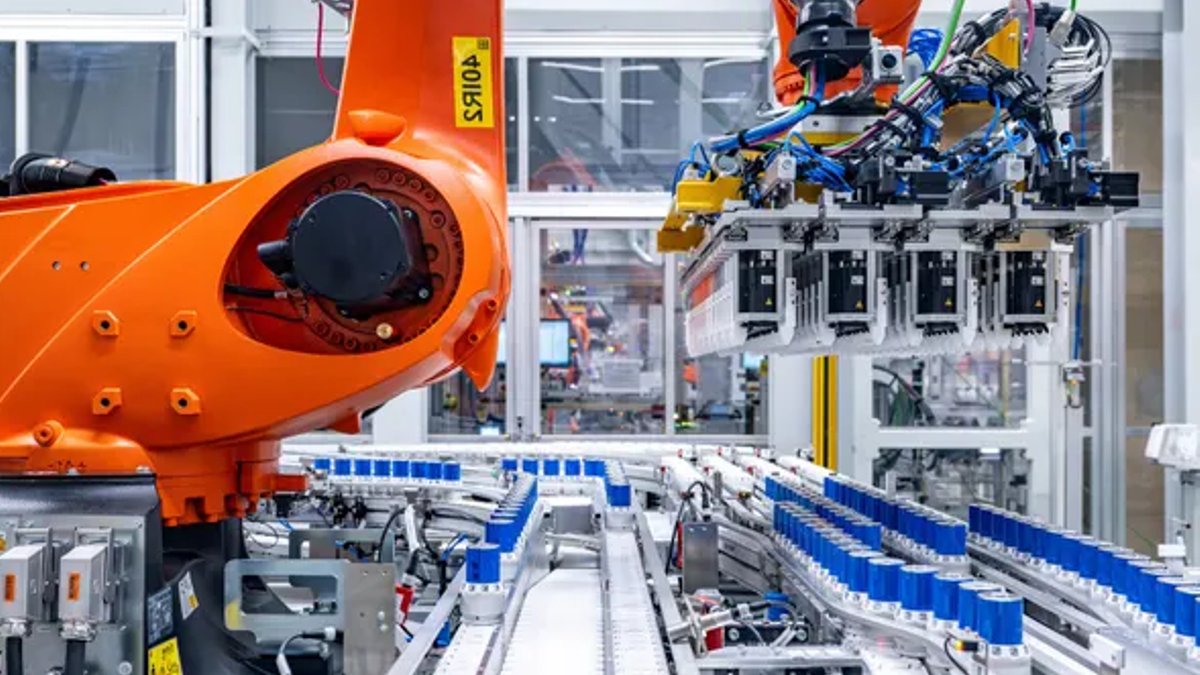
BMW has announced new battery supply deals with Samsung SDI and LG Energy Solution for its sixth-generation high-voltage batteries. LG will supply cells for North American electric vehicles, while Samsung will provide cells for European EVs starting in the late 2020s. This partnership ensures a resilient and flexible supply network, according to Hendrik Lang, head of purchasing and quality of high-voltage batteries at BMW, who emphasized the importance of a global partner network with leading cell manufacturers.
Localizing Supply Chains for Efficiency
The agreements are part of BMW’s strategy to localize its supply chains, with cell production near its five high-voltage battery manufacturing facilities. These sites include locations in Irlbach-Straßkirchen, Germany; Debrecen, Hungary; Shenyang, China; Woodruff, South Carolina; and San Luis Potosí, Mexico. This regional approach not only secures jobs but also reduces the geographical distances between suppliers, battery manufacturing, and vehicle assembly plants, enhancing BMW’s competitiveness. Lang highlighted that this localization is key for maintaining a robust and agile supply chain.
By positioning battery production close to vehicle assembly plants, BMW aims to minimize logistical challenges and costs, ensuring a smoother transition to electric vehicle manufacturing. This strategy also aligns with the company’s broader goal of sustainability, as shorter supply chains typically result in lower carbon emissions.
Diversifying Procurement for Global Competitiveness
In addition to the deals with Samsung SDI and LG Energy Solution, BMW has secured supply agreements with Chinese battery makers CATL and EVE Energy for its European operations. Nicolai Martin, BMW board member responsible for purchasing, stressed that diversifying procurement is essential for ensuring global competitiveness. He noted that operating locally within value chains while leveraging global procurement markets allows BMW to adapt to regional market demands effectively.
In-House Expertise and Investments in EV Production
BMW has established in-house expertise in battery development, production, and recycling across three EU facilities. These include the Battery Cell Competence Center in Munich, where the company explores future battery cell technologies; the Cell Manufacturing Competence Center in Parsdorf, focused on improving production quality and efficiency; and the Cell Recycling Competence Center in Salching, which recovers raw materials for new batteries. Lang emphasized that these centers enable BMW to shape technological advancements and collaborate with partners on equal terms.
In February, BMW announced a €650 million ($760 million) upgrade to its Munich plant to produce electric vehicles based on the Neue Klasse platform. This investment marks a significant shift, as internal combustion engine vehicle production at the plant is set to end by late 2027, after which the factory will exclusively build EVs. Additionally, a $1.7 billion investment at the Spartanburg plant in South Carolina expanded the factory and funded the Woodruff EV battery plant, supporting increased electric vehicle production in the U.S.
BMW’s recent launch of the electric iX3 SUV showcases its innovation, featuring a new battery design with cylindrical cells offering 20% higher energy density and an 800-volt electrical system. During the company’s Q1 earnings call, executives highlighted that future Neue Klasse platform vehicles will be a key driver for the company’s growth, showing BMW’s commitment to leading the electric vehicle market.
