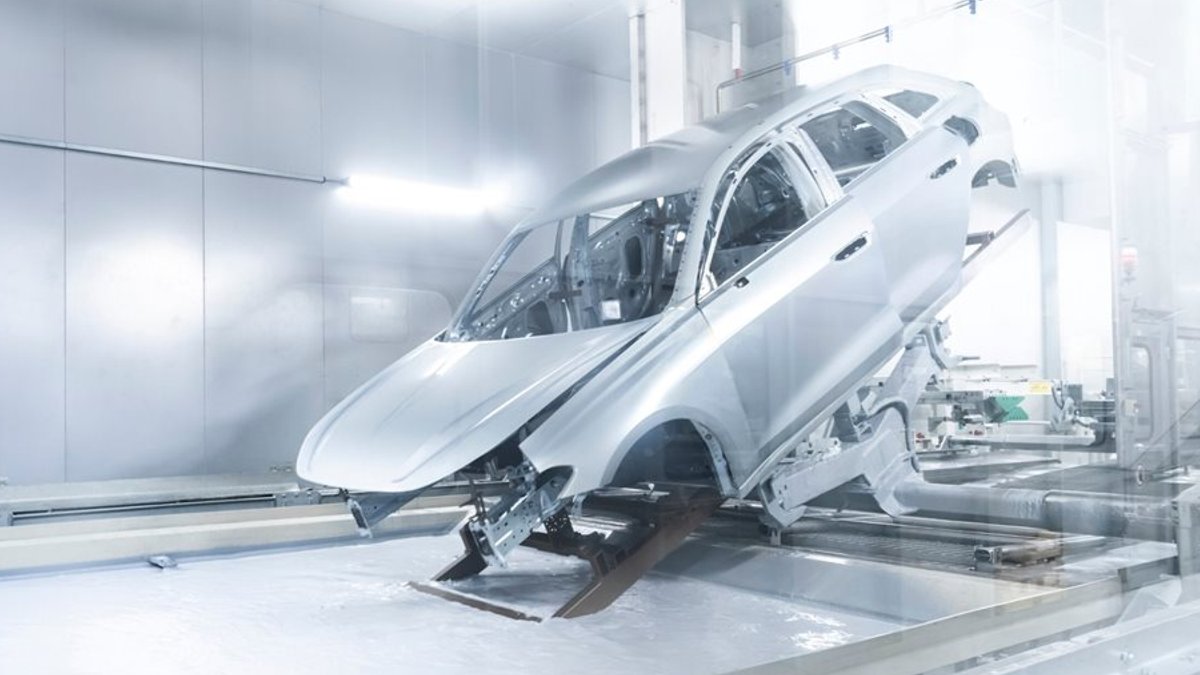
The Audi Group plans to invest $4 billion in a new assembly plant in Georgia, representing its largest manufacturing commitment in the United States to date. The facility, unveiled by President Donald Trump during a rally in Perry, Georgia, will manufacture 200,000 SUVs annually, including the Q7, Q8, and Q9 models, beginning in the early 2030s. Construction is set to start next year, with the project expected to generate 4,500 jobs.
This move follows the Trump administration’s push to bring auto production back to the U.S. through tariffs on imported vehicles, steel, aluminum, and parts. Audi alone faced €1.2 billion (~$1.4 billion) in tariffs last year on U.S.-bound vehicles imported from Europe or Mexico.
Georgia’s role as a battleground state in the upcoming November midterm elections adds political weight to the announcement. The state is home to competitive races for the U.S. Senate and governorship, and the plant’s location—near Volkswagen’s planned first U.S. assembly site—supports Trump’s efforts to highlight economic gains before the vote.
Audi CEO Gernot Döllner described the investment as a “long-term commitment” to the U.S. market. At the rally, he stated, “We’re bringing our largest, most premium SUVs to Macon, Georgia. We believe in the American market’s potential.” The decision comes after Volkswagen’s own expansion plans in the U.S., though final approval for Audi’s project rests with Volkswagen’s supervisory board.
Related Post: Duiba’s AI Drama Unit Profits, Views Surge 45.8 Billion
In Germany, the announcement has raised concerns about job cuts and factory closures as Volkswagen faces rising costs and competition from Asia. The IG Metall union, which represents Volkswagen workers, warned that while U.S. expansion is necessary, German employees must receive clear protections. Christiane Benner, the union’s leader and a Volkswagen board member, emphasized, “The American market must be pursued, but job security here must be guaranteed.”
Olaf Lies, premier of Lower Saxony, the state where Volkswagen’s largest shareholder is based, stressed that U.S. growth should not come at Germany’s expense. “American development must create value here, not displace it,” he said. Volkswagen CEO Oliver Blume positioned the U.S. as a “core market” for profitable growth. “An Audi plant here would further enable our expansion,” he noted. The company’s strategy aligns with broader industry trends, as Toyota recently announced a $3.6 billion truck assembly line in Texas, and Hyundai has pledged $20 billion in U.S. investments if trade agreements remain stable.
The timing of Audi’s announcement carries political significance. American Senator Bernie Moreno of Ohio stated that with this investment, “Audi will build all its SUVs exclusively in the United States.” He added that the Audi plant “would never have been created without tariffs, without common-sense regulations, and without eliminating California’s ability to set fuel economy standards.” However, Audi’s U.S. sales have declined for two consecutive years, with a 7% drop in the first half of 2026, driven by intense competition in China and U.S. tariffs.
